In 2002, famine caused by devastating flooding and drought that occurred in quick succession compelled Malawians to accept genetically modified maize.
Maize yield had dropped by 800 metric tonnes, increasing malnutrition and hunger-related deaths.
To save lives, government directed that the genetically modified maize would be milled before distribution to prevent replanting.
The dilemma birthed the Biosafety Act for safe use of genetically modified organisms (GMOs) and other agricultural biotechnology.
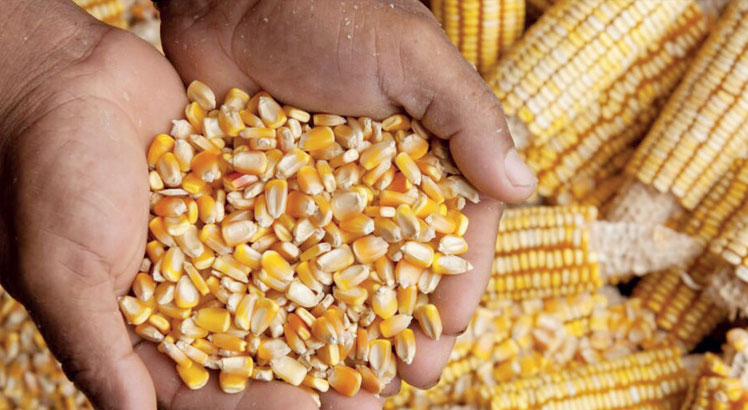
Twenty-five years on, the country is still grappling with chronic hunger due to climate change, pests and diseases.
This amplifies calls for improved farming practices, including biotechnology for improved seeds and animal breeds that resist pests, diseases and adverse weather.
The Food and Agriculture Organisation (FAO) of the United Nations reports that biotechnology could improve food security.
“Genetically modified crop varieties resistant to drought, waterlogging, soil acidity, salinity and extreme temperatures could help sustain farming in marginal areas,” reads the FAO outlook, titled World Agriculture towards 2030.
Malawi is gradually opening up to biotechnologies to boost agricultural productivity.
In 2020, the Ministry of Agriculture approved the BT cotton, which helped Salima-based farmer Amani Kafa harvest 150 bales from a two-acre field that produced him 50 bales when he was using conventional seeds.
Scientists at the Lilongwe University of Agriculture and Natural Resources (Luanar) produced BT cotton to tackle bollworm pest and boost yields.
International Crops Research Institute for the Semi-Arid Tropics seed systems specialist Dr James Mwololo says new crop varieties could help farmers get bumper yields despite climate shocks, new pests and other emerging challenges.
“The use of molecular markers, which is within the biotechnological tools, enables us to develop competitive products in the shortest period possible by tracking the traits that the farmers need from improved seeds,” he states.
In conventional breeding, developing improved seeds with desirable requirements, including disease resistance, takes about eight years, but using molecular markers halves the wait.
This fast-tracks access to quality seeds.
The country’s seed breeders have since improved groundnut varieties—CG7, CG9, CG11 and Chalimbana—to resist the rosette disease and survive drought.
These varieties are widely grown by local farmers, offering high yields and profits.
The genetically modified cash crops exemplify how biotechnology can improve crop yields and incomes, but the adoption of GMO food crops sparks debates, ethical misgivings and public concerns about food and environmental safety.
In January this year, the National Commission for Science and Technology (NCST), together with Luanar and Bayer, announced the completion of a second trial of GM maize developed to deal with fall armyworm and tolerate roundup herbicide.
In a Facebook response, youthful farmer Paul Gondwe said GMOs, just like AI, are inescapable and better than hybrids of local varieties “despite what people have heard”.
This triggered his followers to share their fears, with one calling the innovation as “poison” they do not even need to try.
The African Agricultural Technology Foundation (AATF) through the Open Forum for Agricultural Biotechnology, ranks misinformation and disinformation as major barriers to genetically modified crops.
AATF executive director Canisius Kanangire urges scientists to protect innovations with the potential to uplift livelihoods using effective communication strategies that take into account Africa’s social and religious practices.
“For us to adopt any biotechnology that will be used as food, it has to be assessed and proven to be safe for food or feed. There are risk assessments that we conduct to ensure that these technologies don’t cause any harm to human health and the environment,” says principal environmental officer Lillian Chimphepo, the country’s registrar of biotechnology and biosafety.
The Biosafety Act of 2022 regulates the importation, development, production, testing, release and use of GMOs. Its rules, the Biosafety Regulations of 2007, guide the management of GMOs, regulated by the Environmental Affairs Department.
Besides, Malawi is party to the Cartagena Protocol on Biosafety, which promotes biodiversity conservation, sustainable use of biodiversity as well as fair and equitable sharing of genetic resources.
“We became party [to the international convention] in 2009. We have domesticated this protocol by coming up with the legal framework, policy and regulations on biosafety,” Chimphepo states.
In 2023, Malawi ratified the Nagoya-Kuala Lumpur Protocol “to ensure that anyone responsible for releasing GMOs into the environment has to be liable and must address the damage caused by their technology, she says.
Despite the agricultural biotechnology laws, regulations and early steps, over five million required food aid between October and April, when the harvesting season kicked in.
South Africa is leading the adoption of genetically modified crops on the continent. GMOs account for 83 percent of its maize, 95 percent of soybean and 100 percent of its cotton.